What to see in Palermo in 2 days
Palermo has been on my travel wishlist for a very long time, and finally this year I managed to organize this mini vacation in this splendid city. I’m sharing my brief Palermo weekend guide so that you too can make the most of your time and discover what to see in Palermo in 2 days. Without further ado, let’s get to the recommended itinerary to see Palermo in two days (or a little more, if you have the opportunity).
Table of Contents
Best month to visit Sicily
If you have the opportunity to visit this wonderful city during autumn/winter, I highly recommend it – you’ll find more affordable flights and accommodations, perfect weather for exploring the city and visiting the marvelous churches and palaces, and above all, it will be less crowded compared to other seasons. I would choose the months of October or November for a city visit, while if you want to have see the beautiful sea of Sicily I would suggest September, June or early July.
If you’re traveling with a low-cost airline such as Ryanair, make sure you check hand luggage rules and dimensions to avoid unpleasant surprises. I managed to travel for two days with just a Ryanair-sized backpack.
Day 1: Discovering the Heart of Palermo
Ballarò Market
Start your first day with a visit to Ballarò Market, the oldest and most famous market in Palermo along with the equally famous Vucciria market nearby. Perhaps stop first for breakfast at Pasticceria Costa for a sweet, calorie-rich start to the day with the right dose of caffeine.
Then head toward the market, which is less than a 10-minute walk from the pastry shop. Located in the heart of the historic center, Ballarò is a mix of colors, scents, and sounds that represent the true soul of the city. At the market, you’ll find classic stalls with fresh fruits and vegetables, spices, cheeses, and various foods, but also Palermo’s typical street food. Don’t miss the chance to taste a hot arancino, panelle, or, as I did, a “pane cunzato” (seasoned bread) with fried eggplant accompanied by a nice craft beer – simply divine.
The market atmosphere is a bit chaotic, a small labyrinth of narrow passages between stalls and venues where they’ll try to convince you to stop for something to eat. Explore calmly and then stop at the place that most inspires you. In all honesty, I don’t remember the name of the place where my friend and I stopped, but follow your instinct and you won’t go wrong.
Martorana Church, San Cataldo, and Church of Gesù
After exploring the market, head toward the nearby Martorana Church (officially called Santa Maria dell’Ammiraglio). This architectural gem, located in the heart of Palermo, is famous for its extraordinary Byzantine mosaics, among the most beautiful in Italy. The church was built in the 12th century at the behest of George of Antioch, admiral of the Norman King Roger II, and is a perfect example of the meeting of different cultures: Norman, Arab, and Byzantine. This cultural mix is reflected not only in the artistic richness of the building but also in its architectural structure. Besides the mosaics decorating the walls, take time to admire the golden ceiling and the intricate details that tell biblical scenes with unparalleled vividness.
Visiting hours: The church is generally open every day, but hours may vary; it’s advisable to check in advance.
Tickets: Admission is paid, and tickets can be purchased on-site or online.
Then proceed to the Church of San Cataldo, located just steps from the Martorana. This building, constructed in the 12th century, is a significant example of Norman architecture with strong Arab influences, evident especially in its characteristic red domes that stand out in the urban landscape. The structure is sober and austere, with bare but charming interiors, offering an interesting contrast to the decorative richness of other churches in the city. Originally a private chapel, San Cataldo is now part of the UNESCO site “Arab-Norman Palermo and the Cathedrals of Cefalù and Monreale.”
Visiting hours: Open to the public with variable hours.
Tickets: Again, admission is paid, and tickets can be purchased on-site.
Nearby is the Church of Gesù, also known as Casa Professa. This splendid baroque church, built between the late 16th and 17th centuries, is one of the most spectacular in Palermo. Its interior is a true triumph of baroque art: polychrome marbles, gilded stuccoes, statues, and frescoes covering every corner. Every detail, from the ceiling decorations to the side chapels, reflects the mastery of the artists who designed and decorated it. The church was partially damaged during World War II but has been carefully restored to bring it back to its former glory.
Visiting hours: Open every day, with guided tours available.
Tickets: Admission is usually free or by donation, but some special visits may require a small contribution.
These churches are close to each other, and I recommend visiting them at the same time. Additionally, in the cloister of Santa Caterina, you’ll find a famous pastry shop to enjoy an amazing cannolo: I Segreti del Chiostro. You’ll likely find a fairly long line to be served, but it’s worth having a bit of patience.
Palermo Cathedral
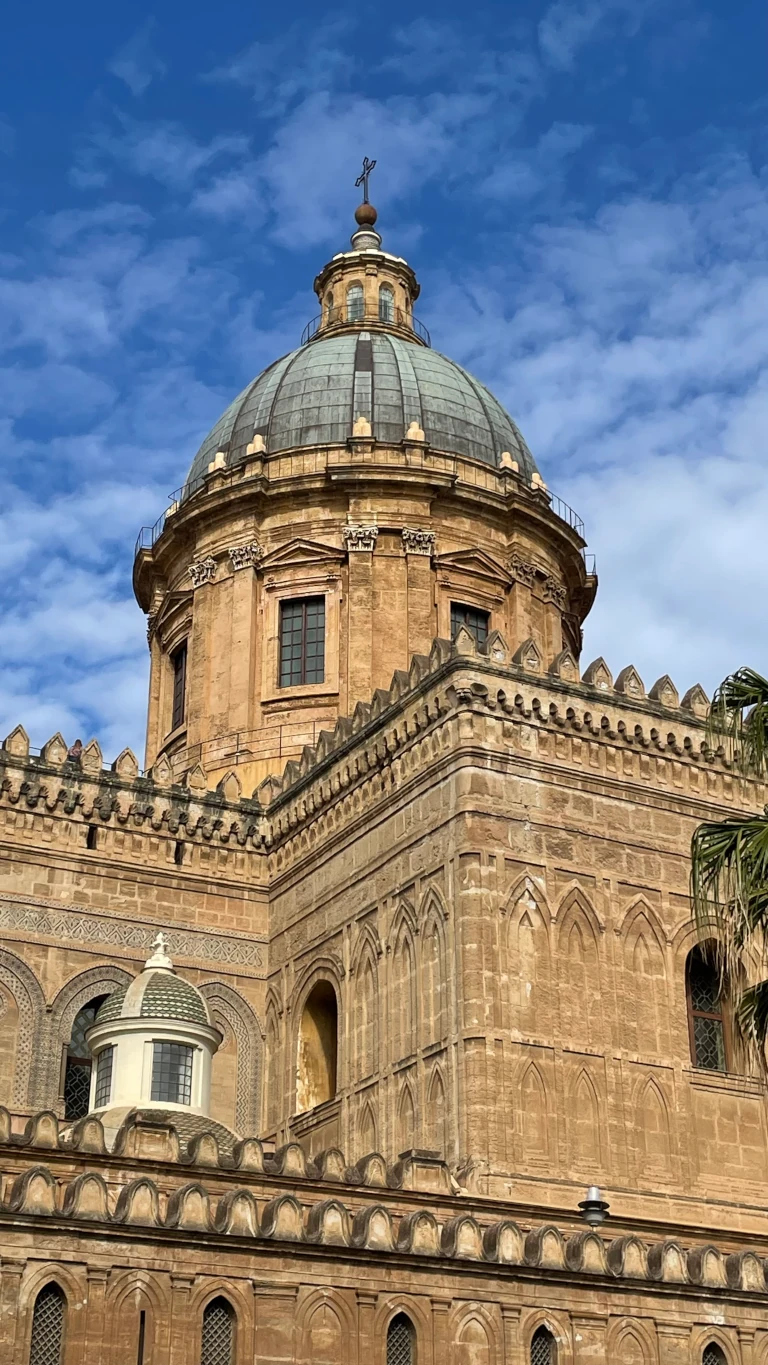
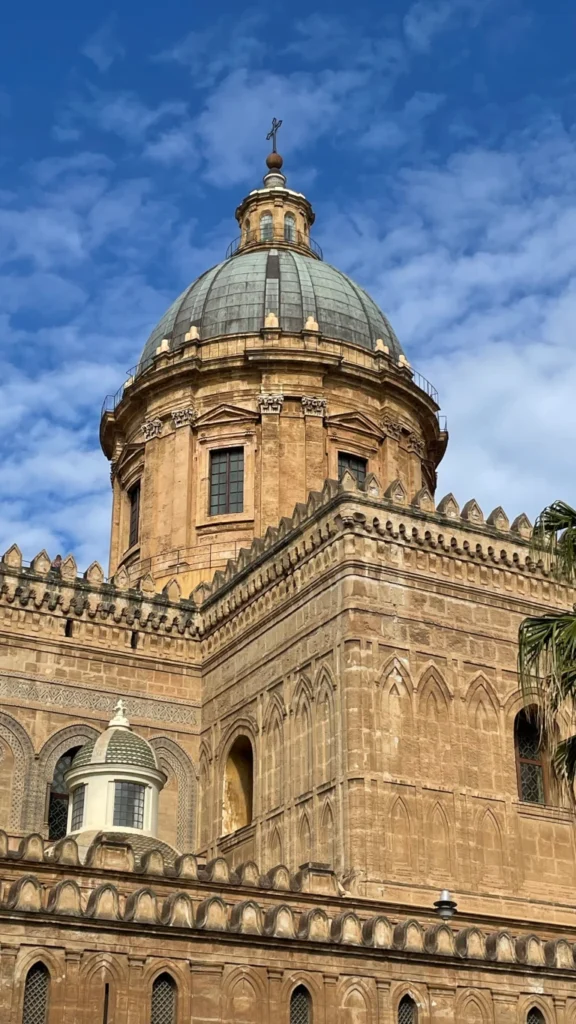
In the afternoon, I recommend visiting Palermo Cathedral, a marvel of architectural styles, from Gothic to Baroque, reflecting the city’s history and the different dominations that have succeeded each other in this place.
Palermo Cathedral, founded in 1185 by Archbishop Walter Ophamil, stands on a site that since Punic times has been home to fortifications, a necropolis in Roman times, and a place of worship during the Arab era. The building, with its eclectic style, combines Norman, Gothic, Arab, Renaissance, and Baroque elements, the result of numerous restorations and expansions over the centuries. Inside, in addition to works of art and precious decorations, there are imperial and royal tombs, including those of Frederick II of Swabia and Roger II.
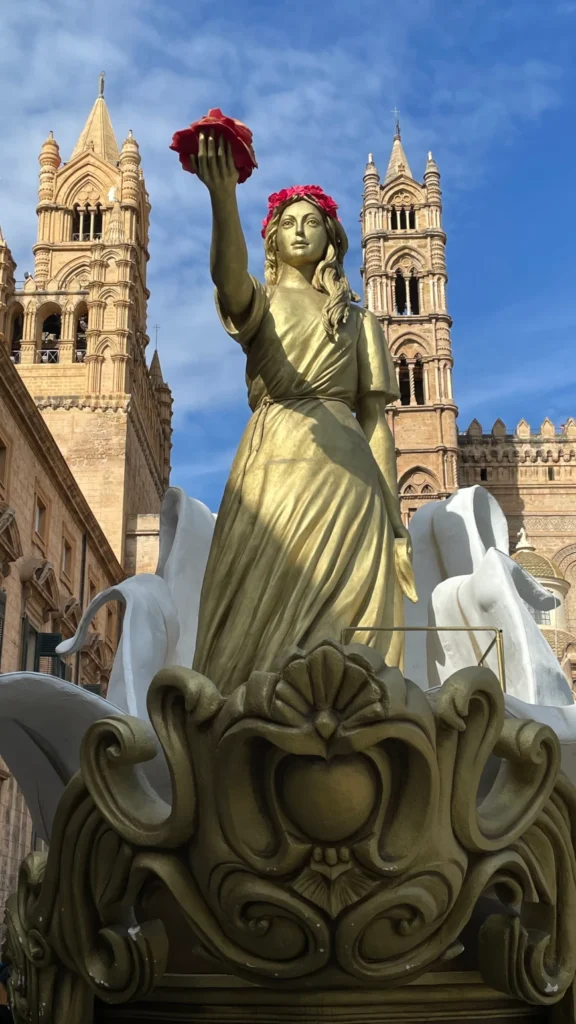
Speaking of the cathedral, one must certainly mention the cult of Saint Rosalia, patron saint of the city, to whom a royal-senatorial chapel on the southern side of the church is dedicated. As we can read from Wikipedia, “The reliquary ark of the patron saint, created between 1631 and 1637, is an extraordinary masterpiece of decorative arts, the highest expression of Sicilian Baroque, a refined and superb work by Palermitan silversmiths and an unparalleled processional monument.”
After visiting the cathedral, you can stroll along Via Vittorio Emanuele, look for souvenirs, or stop for a drink at one of the bars along the street, allowing yourself a moment of relaxation in this weekend dedicated to art and culture.
Evening in Palermo: Seaside Drinks
To enjoy a spectacular sunset and a good glass of wine or an Aperol Spritz, I recommend heading toward the port, where you can take a walk and enjoy the spectacular colors of the sunset before stopping for a drink at a seaside venue like Ciurma Palermo Marina Yachting.
After enjoying the magic of the sunset, continue your evening with a nice dinner, for example at Trattoria Al Vecchio Club Rosanero or Osteria Villena, both perfect for enjoying local cuisine.
After dinner, immerse yourself in Palermo’s lively nightlife: stroll through the streets of the historic center, where the Vucciria and Ballarò districts come alive with lights, music, and venues open until late. Or head to the Kalsa district, a place full of charm where you can sip a cocktail in one of the historic squares, surrounded by the unique atmosphere of Palermo at night.
Day 2: Palermo’s best Mosaics and Panoramas
Norman Palace and the Palatine Chapel
In the afternoon, visit the Norman Palace, one of Palermo’s most iconic attractions. This building is a symbol of Norman power in Sicily and is the oldest royal residence in Europe, now housing the Sicilian Regional Assembly, and in fact, you might find it closed to the public.
Like the cathedral, this palace has a history dating back to the Punic period, traces of which can still be seen in the dungeons and underground areas. You’ll find evidence of Byzantine domination, the Norman period, and subsequent dominations in some architectural and artistic details, and thanks to the audio guide, you’ll discover more about this wonderful building.
The true gem of the palace is undoubtedly the Palatine Chapel, a masterpiece that represents the pinnacle of medieval art. This extraordinary place of worship encompasses a unique harmony of styles and cultural influences, resulting from the meeting of Byzantine, Arab, and Norman traditions. Its golden mosaics tell sacred stories through images of extraordinary beauty and complexity, transporting visitors on a spiritual and aesthetic journey. The Arab decorations, with intricate geometric patterns and inscriptions, testify to the craftsmanship and refined taste of Islamic cultures. The carved wooden ceiling, with its elaborate motifs and symbols rich in meaning, adds a touch of warmth and depth, enveloping the entire environment in an aura of sacredness and magnificence. The Palatine Chapel is not just a place of worship but an authentic living testimony to centuries of history, dialogue between civilizations, and extraordinary artistic capability.
Afternoon: Monreale and its Cathedral
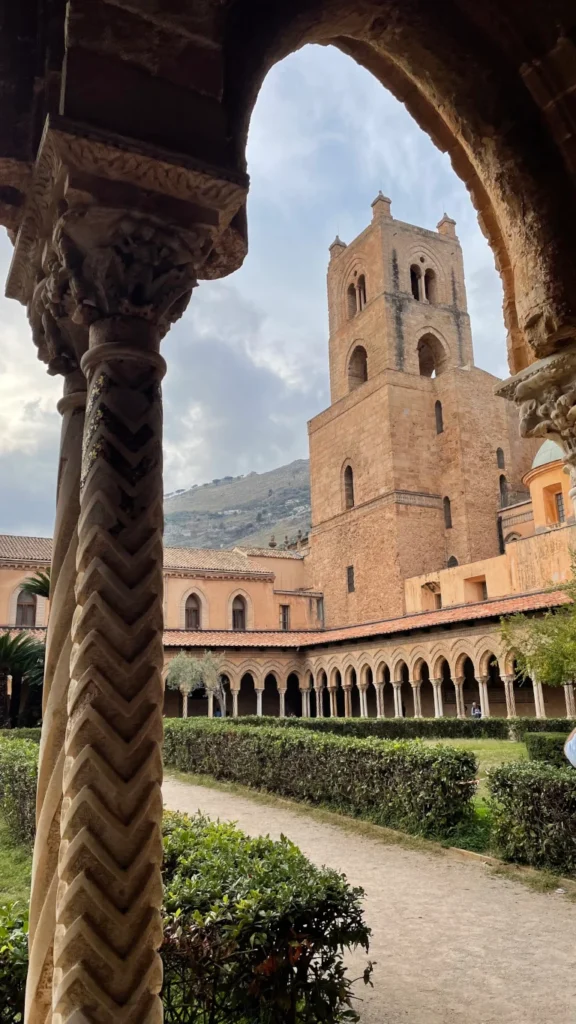
Dedicate the afternoon to a visit to Monreale, a town located a few kilometers from Palermo, famous for its wonderful Cathedral. You can easily get there by taking bus line 389 from the stop behind the Norman Palace (Indipendenza Palazzo Reale). There’s also a ticket office nearby to buy tickets; continue along the road and you’ll find it.
Some precautions: you might find characters at the bus stop who will try to convince you that the bus will take hours to arrive, that you’ll arrive in Monreale and the Cathedral will be closed, that the only way is to go with their taxi for just €40, etc. Obviously, this isn’t true: go to the Palermo transport website and check the bus schedule (it’s not very frequent, it takes about 30-40 minutes). Select “389” in the drop-down selection and click “cerca”, you will get “feriale” timetable (weekdays and Saturday) and “festivo” (Sunday and other festivities). Also, go to the Cathedral’s website and check visiting hours and any announcements about extraordinary closures for any doubts.
Once you arrive at the terminus in Monreale, you’ll only have to walk a very short distance to reach the historic center, in front of the Cathedral. If you arrive around lunchtime, I recommend eating excellent pasta at Osteria Paper’s; you won’t be disappointed.
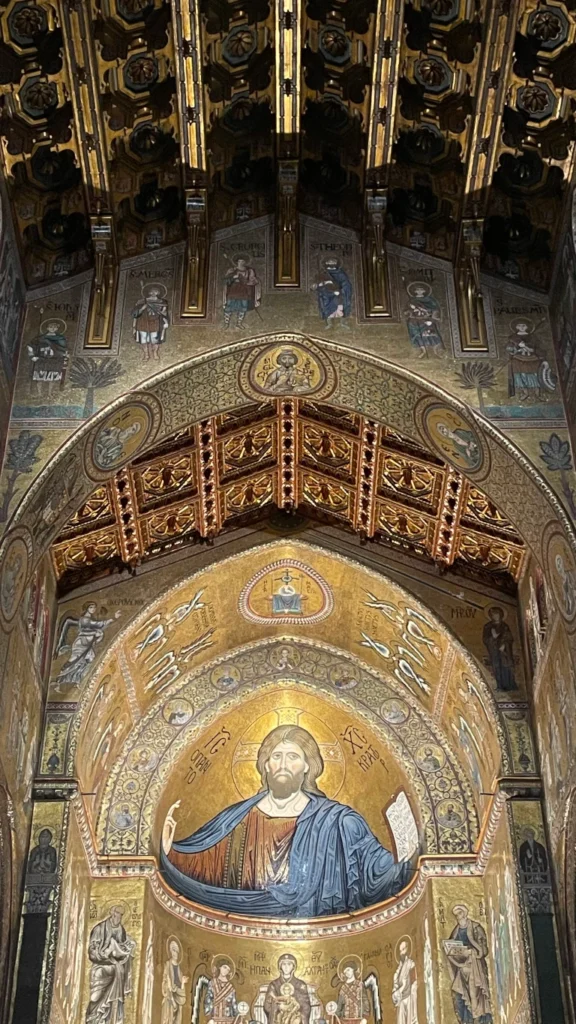
Monreale Cathedral is famous for its golden mosaics covering the interior walls, depicting biblical scenes with extraordinary artistic precision. Surely we’ve all seen images of these mosaics in art history books, but I assure you that seeing it in person is a unique experience that will leave you breathless. Don’t forget to also visit the Benedictine cloister, a place of peace and beauty with its finely decorated columns, and I strongly recommend including a visit to the terraces, which will allow you to admire the cloister and, of course, the wonderful panorama from above.
Evening: Return to Palermo
Back in Palermo, you can start with an aperitif and a drink at Mak Mixology, a nice venue with unique drinks that often offers live music. You can then have dinner at Trattoria Al Ferro di Cavallo (it won’t disappoint) or grab some arancine on the go; however you choose, you can’t go wrong!
Where to eat and drink in Palermo
I mentioned quite a few spots for food and drinks in this Palermo itinerary so I wanted to summarize all the recommended places in one paragraph.
Pastry and Sweet
- Pasticceria Costa – A beloved local institution serving traditional Sicilian pastries and cannoli with perfectly crisp shells and rich ricotta filling.
- I segreti del chiostro – Charming café nestled in a historic cloister offering homemade desserts and a peaceful atmosphere away from the city bustle.
Street Food
- Ballarò – Palermo’s oldest and most authentic market where vendors serve fresh panelle, arancini, and sfincione amid a colorful, bustling atmosphere.
- Vucciria – Historic market transformed into a lively street food hub at night, perfect for sampling local specialties and experiencing Palermo’s vibrant nightlife.
Drinks
- Ciurma Palermo Marina Yachting – Sophisticated waterfront bar with panoramic harbor views and expertly crafted cocktails, ideal for sunset drinks.
- Mak Mixology – Trendy cocktail bar with innovative mixology techniques, serving artisanal drinks in a stylish, contemporary setting.
Restaurants
- Trattoria Al Vecchio Club Rosanero – family restaurant serving hearty Sicilian classics in a warm, nostalgic atmosphere.
- Osteria Villena – Elegant dining spot offering refined interpretations of traditional dishes with an emphasis on fresh, local ingredients.
- Trattoria Al Ferro di Cavallo – Authentic, no-frills eatery beloved by locals for generous portions of homestyle Sicilian cuisine at reasonable prices.
Monreale
- Osteria Paper’s – Quaint restaurant near the famous cathedral serving regional specialties perfect for a relaxing lunch after sightseeing. Try one of the amazing pasta dishes.
- Dolceria Antico Biscottificio Modica: for a sweet treat you need to try this pastry shop.
I hope this brief guide can help you organize the perfect weekend in Palermo, with the right mix of culture, relaxation, and excellent food. I certainly hope to return to Sicily to explore other beautiful cities, and perhaps to return during the summer to also enjoy the sea and beaches of this wonderful region. If you want to discover other hidden gems in Italy for spring I have the perfect article for you, just click here!
GetYourGuide links and banners are affiliate links.